
Most people buy an alarm or camera to feel safe, yet few ask who else can see inside their home. Modern home security systems collect video, entry codes, app logins and phone data every day, and home alarm systems now link to apps, cloud servers and outside control rooms. That data shows when you leave, sleep and have visitors, so in the wrong hands your own setup can work against you. Here are eight privacy features to check before you sign up, so your system protects you too.
Why Should You Care About Privacy in a Security Setup?
A camera at your front door sees far more than burglars. It captures your kids, your visitors and the neighbour who waters your plants. Your phone app also logs each time someone arms or disarms the alarm. Put together, these details form a clear map of your daily routine, and good home security systems should guard that map as closely as they guard your doors.
Criminals know this. Weak passwords and old software have let hackers into cheap cameras worldwide, sometimes for weeks before the owner noticed. Good privacy features close those gaps. They also help you meet your legal duties, since WA surveillance law sets clear limits on what you may record, especially private conversations.
1. Does the System Encrypt Your Data?
Encryption scrambles your footage and alarm signals so only your own devices can read them. Look for end-to-end encryption on video streams and strong encryption, such as 128-bit AES or higher, on the wireless signals between sensors and the alarm panel.
Many quality home alarm systems now encrypt every signal by default. Ajax alarms, for example, encrypt sensor signals and can detect jam attempts. Ask your installer to confirm the encryption level by email rather than accept a vague answer.
2. Can You Control Who Has Access?
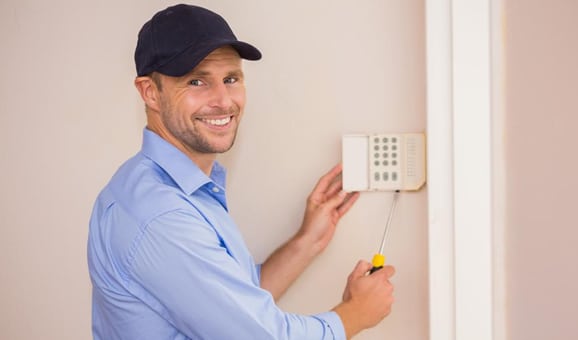
Every person with an app login or a keypad code holds a key to your home. A good system lets you create separate user codes for each family member, your cleaner or a tradie, and then delete a code the day you no longer need it.
Two-factor authentication adds another layer. It asks for a second check, such as a text code or a fingerprint, before anyone can open the app. This one step stops most account takeovers, even when someone steals or guesses your password.
3. Where Does Your Footage Live?
Some cameras send every clip to a cloud server overseas, while others save footage on a hard drive inside your home. Local storage on a network video recorder (NVR) keeps your footage under your own roof and away from third-party servers. Cloud storage offers easy remote access, but you must trust the company behind it.
Check where the provider stores data, how long it keeps clips and whether you can delete them yourself. A hybrid option suits most homes: an NVR for daily footage, plus encrypted remote access through the app.
4. Do the Cameras Offer Privacy Masks?
Privacy masks let you black out parts of the camera view, such as a neighbour’s window, a shared driveway or a public footpath. The camera still watches your property, but it never records the areas you block. Quality brands such as Hikvision and Dahua include this feature.
Masks protect you as much as your neighbours. A camera that films into the house next door can spark disputes and may breach surveillance laws. A good installer will angle cameras to cover entry points first and then place masks over any area outside your boundary.
5. Can You Turn Indoor Cameras Off When You Are Home?
Indoor cameras help when you are away, but few people want a lens on them while they relax on the couch. Look for a privacy mode that closes the lens or stops video when you disarm the alarm.
Schedules give you the same control. You can tell indoor cameras to work only between 8am and 5pm on weekdays, or only when you arm the alarm. Motion sensors offer another option. They detect movement without any images at all, which makes them ideal for bedrooms, and pet-friendly models ignore small pets.
6. How Does the Control Room Handle Your Details?
With alarm monitoring, a control room receives your alarm signals and responds when a sensor trips. That means the centre holds your address, contact list, codes and sometimes live video. Ask where staff work, who can view your cameras and how long the centre keeps your records. A local control room with an A1 grade under Australian Standard AS 2201.2 usually gives you stronger oversight than an offshore call centre.
If you compare security monitoring Perth providers, check the police licence too. In WA, security firms need a licence from WA Police, and staff must pass background checks before they handle client data. Local providers such as SMS Security list WA Police licensed consultants and an A1 grade control room, which shows the kind of credentials worth a look.
7. Does the Brand Release Regular Software Updates?
Old firmware remains one of the most common ways hackers get into cameras and alarm panels. Good brands release updates to fix weak spots, and good systems install them on their own or prompt you to act.
Once your system runs, keep these habits:
- Change every default password on cameras, NVRs and apps on day one.
- Turn on automatic updates wherever the app allows it.
- Put security devices on a separate WiFi network from guest devices.
- Remove old phones and former tenants from the app.
8. Does the Provider Have a Clear Privacy Policy?
A trustworthy provider explains in plain words what data it collects, why it collects it and who it shares it with. In Australia, many businesses must follow the Australian Privacy Principles under the Privacy Act 1988, and those rules give you the right to ask for and correct your personal information.
Read the policy before you sign. Watch for vague lines about “partners”, and ask how the company deletes your data if you cancel.
Wired or Wireless: Which Option Protects Privacy Better?
Both wired and wireless home security systems can protect your privacy well when your installer sets them up correctly. The difference lies in how signals travel and where weak spots appear.
| Feature | Wired Systems | Wireless Systems |
| Signal path | Physical cables inside walls | Encrypted radio signals |
| Main privacy risk | Physical access to cables or panels | Jam attempts or weak encryption |
| Footage storage | Usually a local NVR | Local, cloud or both |
| Best fit | New builds and renovations | Older homes and rentals |
Modern wireless home alarm systems with strong encryption now match wired setups for most homes. Your layout and budget should guide the choice.
What Questions Should You Ask Before You Sign Up?
A quick chat reveals how seriously an installer treats privacy. Take these questions to your free quote:
- Does the system encrypt both video and alarm signals?
- Where does my footage go, and who can view it?
- Can I add, change and delete user codes myself?
- Can I cancel alarm monitoring at any time, and what happens to my data if I do?
- Does your security monitoring Perth team work from a local A1-grade control room?
Clear, confident answers point to a provider who respects your privacy. Hesitation or vague replies suggest you should look elsewhere.
Conclusion
Strong security and strong privacy should go hand in hand. The best home security systems encrypt your data, give you full control over access, keep footage where you choose and respect the people next door. Before you choose between home alarm systems, run through these eight features and ask the hard questions. Local, licensed providers such as SMS Security show what good practice looks like, but the final check sits with you.
Frequently Asked Questions
- Can my neighbour’s camera legally film my backyard?
It depends on the angle and whether it records private activities or conversations. Ask your neighbour to add a privacy mask first, then contact your local council or police if the problem continues. - Is cloud storage safe for my security footage?
It can be safe if the provider uses strong encryption and two factor login. Local storage on an NVR gives you more control if privacy is your top concern. - Do motion sensors record video or images?
Standard motion sensors only detect movement and body heat. Some newer models take a photo when they trigger, so check the specs if you want zero images. - How often should I update my alarm and camera software?
Check for updates every few months, or simply turn on automatic updates. Install any security patch as soon as the brand releases it. - What should I do if I think someone has hacked my cameras?
Change every password straight away, turn on two-factor login and check the app for unknown users. Then call your installer to reset and update the system.